
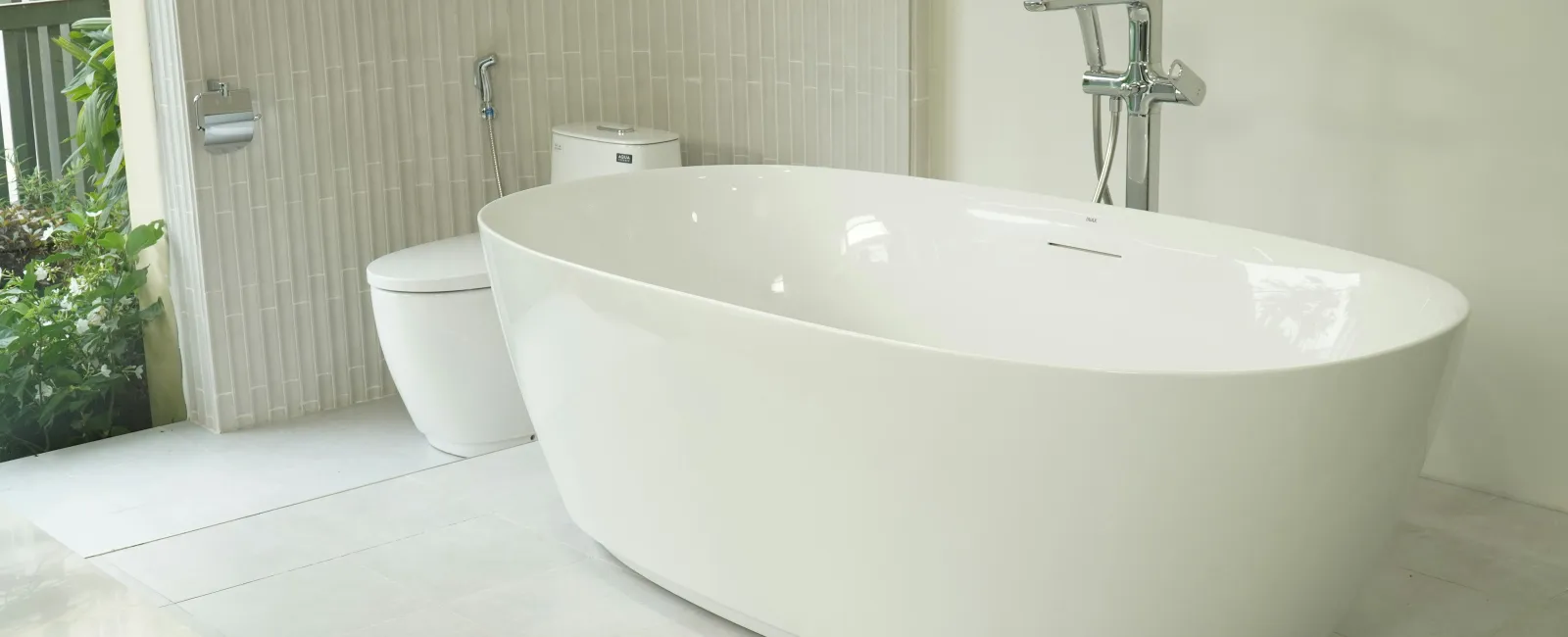
You start filling your bathtub for a relaxing soak, but the water level never rises, or worse, it fills partially, then slowly drains away before you can even get in. When your bathtub won't hold water, the frustration is immediate, especially after a long day when all you want is a warm bath.
The problem isn't usually a clog or broken plumbing. In most cases, your drain stopper isn't sealing properly. But here's what many homeowners don't realize: bathtubs use four completely different types of drain stoppers, and each type fails in different ways and requires specific fixes.
At Total Mechanical Care, we've been repairing and replacing bathtub drain assemblies since 1923. After diagnosing thousands of bathtubs not holding water calls, we've learned that identifying your stopper type first is essential; attempting the wrong fix wastes time and can damage your drain assembly.
Step 1: Identify Your Bathtub Stopper Type
Before attempting any repair, you must identify which type of drain stopper your bathtub uses. The four main types look different, operate differently, and fail for different reasons.
Trip Lever / Plunger Type
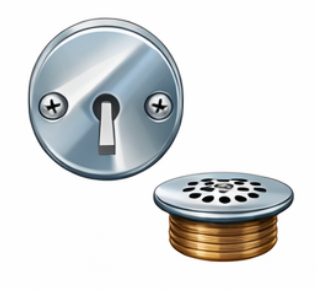
How to identify: You see a lever switch on the overflow plate (the metal cover on the tub wall below the faucet). The drain itself has a simple grate or strainer, no visible stopper. When you flip the lever up, water stays in the tub. Flip it down, water drains.
How it works: Behind the tub wall, the lever connects to a long linkage rod with a weighted plunger at the end. When engaged, the plunger drops down inside the overflow pipe to seal the junction where the waste and overflow pipes meet.
Common in: Older homes (pre-1990s), builder-grade installations, deeper soaking tubs.
Lift-and-Turn Type
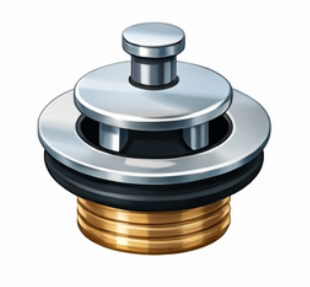
How to identify: The visible stopper in your drain has a small knob on top. To close the drain, you lift the stopper slightly and turn it. To open, you lift and turn in the opposite direction.
How it works: The stopper sits on a threaded post. Turning the stopper up or down threads it to create or release the seal. A set screw in the knob or on the side of the post holds it in place.
Common in: Modern tubs, newer construction, renovated bathrooms.
Push-Pull/Pop-Up Type
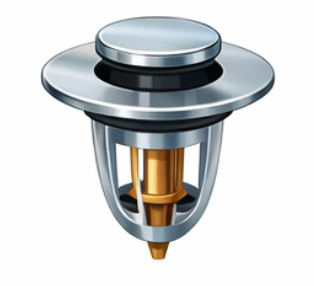
How to identify: The stopper is a round cap that you can grasp with your fingers. Push down to close the drain, pull up to open. No twisting required.
How it works: A rocker arm linkage beneath the drain connects to a pivot rod. Pushing down on the stopper activates this mechanism, creating a seal.
Common in: Mid-range installations, bathroom remodels, replacement assemblies.
Toe-Touch Type
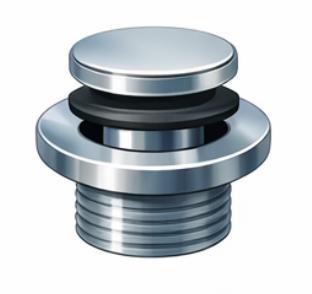
How to identify: A flat, spring-loaded cap sits flush with the drain. Push once with your toe to close, push again to open. No lifting or turning necessary.
How it works: An internal spring mechanism toggles between open and closed positions with each press. An O-ring creates the seal when closed.
Common in: Modern, high-end installations, luxury bathrooms, contemporary tubs.
Fixing Trip Lever / Plunger Stoppers That Won't Hold Water
Trip lever systems are the most common cause of "bathtub won't hold water" calls we receive. After 100+ years of servicing these assemblies, we've identified the most frequent failure points.
Most Common Problem: Linkage Too Short
If your bathtub drains slowly when the lever is closed, the plunger isn't reaching far enough down to seal the drain junction fully. Over time, linkages can shift or become disconnected, preventing proper sealing.
How to fix it:
- Remove the two screws holding the overflow plate to the tub wall
- Carefully pull the plate away; the entire linkage, lever, and plunger will come out as one assembly
- Inspect the plunger at the end of the linkage. If it's missing or disconnected, use a magnetic retrieval tool to fish it from the overflow pipe
- Locate the adjustment nuts on the threaded rod (usually two lock nuts)
- To lengthen the linkage (lower the plunger), thread the bottom lock nut downward, then adjust the top nut to lock the position
- Reinsert the entire assembly into the overflow opening, ensuring the linkage hangs straight without tangling
- Screw the overflow plate back in place and test
Second-most-common problem: The plunger itself has corroded, worn, or lost its rubber seal. Professional drain assembly replacement is the permanent solution for severely deteriorated components.
Cost: DIY adjustment = FREE.
Fixing Lift-and-Turn Stoppers That Won't Hold Water
Lift-and-turn stoppers fail when the threads wear out, the O-ring deteriorates, or the set screw loosens, preventing proper sealing against the drain.
Most Common Problem: Worn O-Ring or Threads
The rubber O-ring that creates the seal hardens and cracks over time, especially with regular exposure to hot water and bath products. Similarly, the threads can strip from repeated use.
How to fix it:
- Set the stopper to the open position
- Look for a small set screw on the knob (may be under a cap) or on the side of the post. Remove it with a screwdriver or Allen wrench
- Hold the stopper body while turning the knob counterclockwise to unscrew
- Once the knob is off, the entire stopper should unscrew from the threaded post in the drain
- Inspect the O-ring at the bottom of the stopper. If it's hardened, cracked, or compressed, replace it (available at hardware stores for $2-5)
- Check the threads on both the stopper and the post. If stripped, the entire assembly needs replacement
- Clean any hair or debris from the post and drain
- Apply plumber's grease to the O-ring and threads
- Screw the stopper back onto the post, replace the set screw, and test
Cost: DIY O-ring replacement = $2-10. New lift-and-turn assembly = $15-40. Professional stopper installation, including parts.
Fixing Push-Pull / Pop-Up Stoppers That Won't Hold Water
Push-pull assemblies use a rocker-arm linkage beneath the tub. When the adjustment or connection fails, the stopper won't seal properly even when pushed down.
Most Common Problem: Misaligned Rocker Arm
The rocker arm under the drain connects to a pivot rod. If this connection loosens or the arm bends, the stopper won't press down with enough force to seal.
How to fix it:
- Grasp the stopper cap and pull straight up; most pop-ups lift out
- If it won't budge, there may be a screw holding it in place. Look for a slot in the cap where you can insert a flathead screwdriver while keeping the outer rim with pliers
- Once removed, inspect the rocker arm beneath. You may need to access this from underneath the tub if there's an access panel
- Check that the pivot rod is properly connected to the rocker arm. Tighten or reconnect as needed
- Inspect the stopper itself for wear, especially the seal on the bottom
- Clean all components and apply plumber's grease to moving parts
- Reinstall the stopper and test. You may need to adjust the rocker arm height to achieve proper sealing
When to call professionals: If you don't have access to the underside of your tub, or if the rocker arm assembly is corroded or broken, professional plumbing repair ensures correct diagnosis and replacement without tub removal.
Cost: DIY repair = $5-15 for cleaning supplies. New pop-up assembly = $20-60.
Fixing Toe-Touch Stoppers That Won't Hold Water
Toe-touch stoppers fail when the internal spring mechanism weakens, the O-ring deteriorates, or debris prevents the toggle action from engaging properly.
Most Common Problem: Weakened Spring or Dirty Mechanism
The spring that creates the toggle action can lose tension over time, preventing the stopper from staying closed. Alternatively, soap scum, hair, and mineral deposits can gum up the mechanism.
How to fix it:
- Press the stopper to ensure it's in the open position
- Look for a set screw on the side of the cap or underneath the rim. Remove it
- Twist the cap counterclockwise while holding the base steady to unscrew
- Pull the entire assembly straight up, and you'll see the spring and O-ring inside
- Clean all components thoroughly with vinegar to remove mineral deposits
- Inspect the spring. If it's stretched, corroded, or broken, the assembly needs replacement
- Check the O-ring for cracks or compression. Replace if damaged ($2-5)
- Reassemble, apply plumber's grease to the O-ring, and reinstall
- Test the toggle action. It should click firmly between open and closed positions
Cost: DIY cleaning = FREE. Replacement O-ring = $2-5. New toe-touch assembly = $25-70.
When the Problem Isn't the Stopper
If you've identified your stopper type, cleaned or adjusted it properly, and your bathtub still won't hold water, the issue may be:
Hair-Wrapped Stopper Post
Hair wraps around the threaded post beneath the stopper, preventing it from seating properly. Remove the stopper completely and use needle-nose pliers or a drain hair removal tool to extract wrapped hair.
Corroded or Damaged Drain Flange
The drain flange (the threaded fitting the stopper screws into) can corrode, crack, or develop uneven surfaces that prevent sealing. This requires drain flange replacement, which involves removing the old flange and installing a new one with plumber's putty.
Improper Drain Installation
If the drain wasn't installed level or if the tub has settled over time, stoppers may not seal evenly. This typically requires professional drain reinstallation to correct the angle and ensure proper sealing.
Overflow Gasket Failure
For trip lever systems, the gasket behind the overflow plate can deteriorate, allowing water to escape through the overflow rather than the drain. Replacing this gasket requires removing the overflow plate and installing a new rubber gasket.
Need Professional Bathtub Drain Repair?
If you've tried adjusting your drain stopper but your bathtub still won't hold water, Total Mechanical Care provides expert diagnosis and repair. Our licensed plumbers have been servicing bathtub drain assemblies since 1923.
We quickly identify stopper types, diagnose failure points, and provide permanent solutions—whether that's adjusting your existing assembly, replacing worn components, or converting to a more reliable stopper type. We offer flat-rate pricing with no surprises and same-day service availability.
From simple drain stopper adjustments to complete drain assembly replacement, our experienced team delivers repairs that last.
Contact Total Mechanical Care today for professional bathtub drain repair.


