
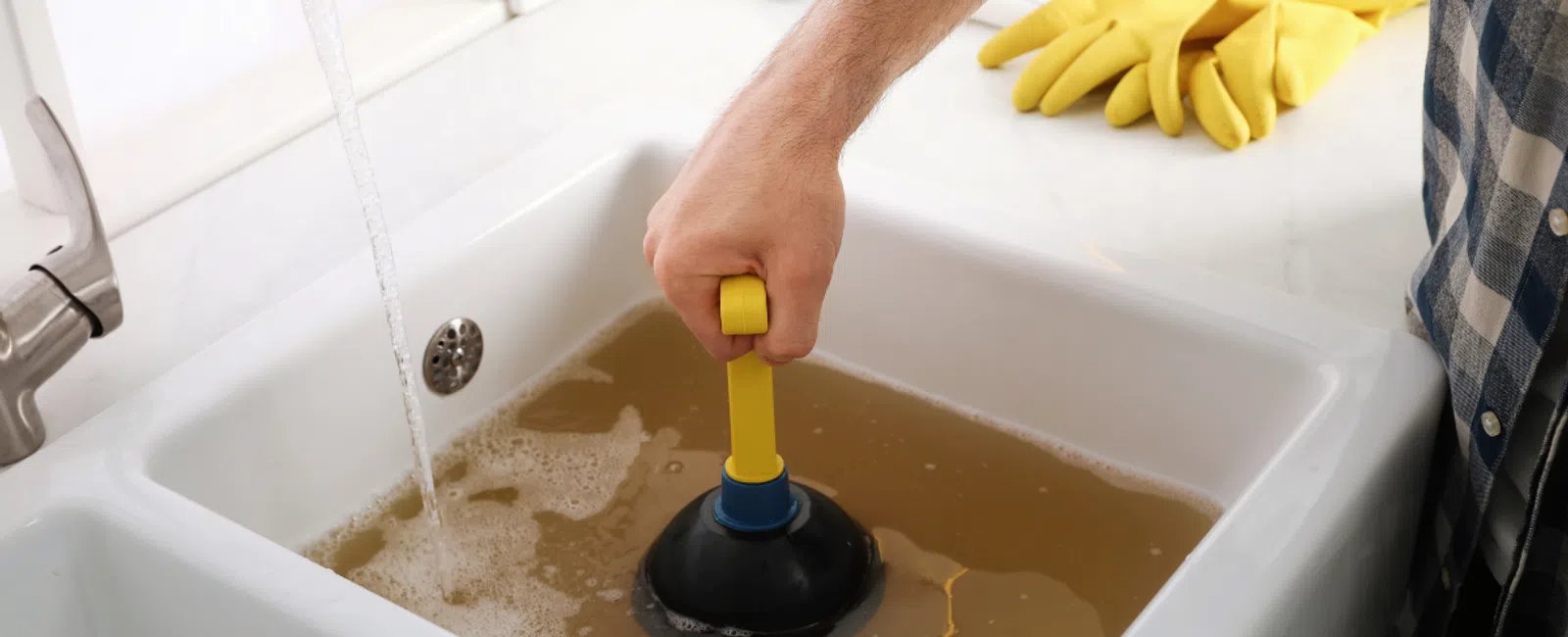
When a drain backs up, most plumbers will tell you to skip the store-bought chemicals and clear the clog mechanically. For everyday clogs, that means a plunger or a hand auger. For tougher or recurring blockages, plumbers reach for a motorized drain snake or hydro jetting, and they use a camera inspection to pinpoint exactly what is causing the problem. The one thing nearly every licensed plumber warns against is pouring chemical drain cleaner down your pipes.
What Plumbers Use to Clear a Clogged Drain
A good plumber matches the tool to the clog instead of guessing. The usual progression looks like this:
- Plunger. A cup plunger handles light clogs in sinks, tubs, and showers. It is the simplest fix and often the only one you need.
- Hand auger (drain snake). For clogs sitting in the P-trap or just past it, a manual snake breaks up hair and debris without harming your pipes.
- Motorized drain machine. When a clog is deeper in the line, a powered auger cuts through buildup that a hand tool cannot reach.
- Hydro jetting. For heavy grease buildup, recurring clogs, or tree roots in the main line, high-pressure water scours the pipe walls clean. This is the gold standard for stubborn blockages.
- Camera inspection. Before and after the job, a small camera shows the plumber the exact location and cause of the clog, so the fix is precise and lasting.
Most homeowners only own a plunger, which is exactly why a slow drain that will not clear is usually a sign to call a professional.
What Plumbers Tell You to Avoid
The big one is liquid chemical drain cleaner. These products rely on harsh acids or lye that generate heat inside your pipes. Over time, that corrodes metal, warps PVC, and damages fixtures, and it often does not even fully clear the clog. Plumbers see the long-term damage these products cause far more often than homeowners realize.
You have probably also read that baking soda and vinegar will dissolve a clog. The fizz looks impressive, but it does very little against real blockages like packed hair or hardened grease. It is fine as a light maintenance rinse, not as a repair.
If a clog is bad enough that a plunger will not move it, the safe move is a mechanical clearing by a licensed plumber, not another round of chemicals.
When to DIY and When to Call a Pro
You can usually handle a single slow drain yourself with a plunger or an inexpensive hand snake from the hardware store. Call a professional when:
- More than one drain is backing up at the same time
- Water rises or gurgles in another fixture when you run the sink or flush
- The clog keeps coming back after you clear it
- You notice sewage smells or water pooling around floor drains
These signs often point to a deeper problem in the main line, which DIY tools cannot reach safely.
How Atlanta Homeowners Can Prevent Clogged Drains
Prevention is cheaper than any repair. We tell our North Georgia customers to:
- Use drain screens to catch hair and food scraps
- Never pour grease or cooking oil down the sink, since it hardens as it cools
- Run hot water for a few seconds after each use to keep buildup moving
- Schedule professional drain cleaning about once a year, especially in older Atlanta-area homes
Trusted Drain Cleaning Across Metro Atlanta
Total Mechanical Care offers upfront pricing, licensed and insured plumbers, and the right equipment for any clog, from a simple snake to full hydro jetting. We proudly serve Cumming, Alpharetta, Roswell, and the surrounding North Georgia communities.
Call us at 404-907-1924 or book your drain cleaning service online today.
Frequently Asked Questions
Do plumbers recommend chemical drain cleaners?
No. Most licensed plumbers avoid chemical drain cleaners because they can corrode pipes, damage fixtures, and rarely clear a clog completely. Mechanical methods like snaking or hydro jetting are safer and more effective.
What is the best way to unclog a drain?
For a light clog, a plunger or hand auger usually works. For deep or recurring clogs, a plumber will use a motorized drain snake or hydro jetting after inspecting the line with a camera.
How often should I have my drains professionally cleaned?
Most homes benefit from professional drain cleaning about once a year. Homes with older plumbing or frequent garbage disposal use may need it more often.
Does baking soda and vinegar really work on clogs?
Not on serious clogs. It can freshen a drain, but it will not break down packed hair or hardened grease. A mechanical clearing is the reliable fix.


