
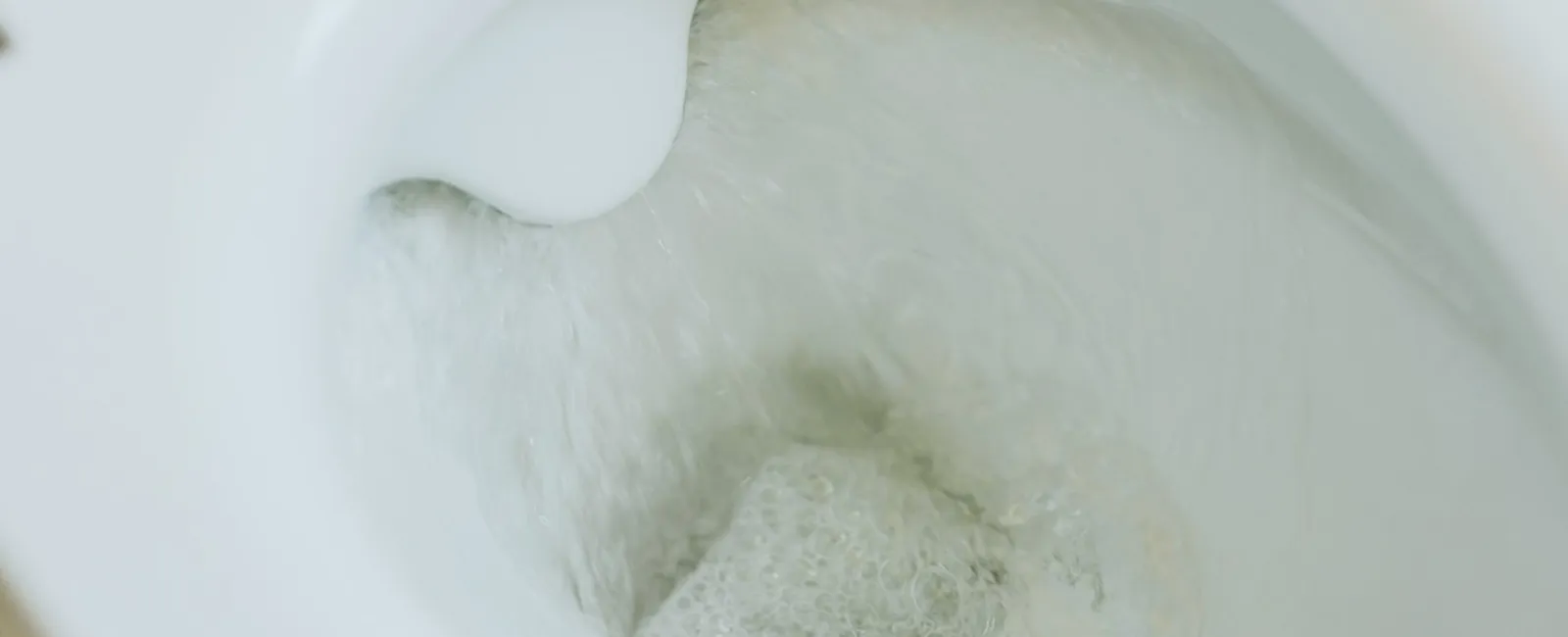
If your toilet starts bubbling, gurgling, or making unusual sounds every time someone uses the shower, you're witnessing a warning sign that your plumbing system isn't moving air and water the way it should. This cross-fixture symptom, where one plumbing fixture affects another in a different part of the bathroom, almost always indicates a venting or drainage problem that will worsen if ignored.
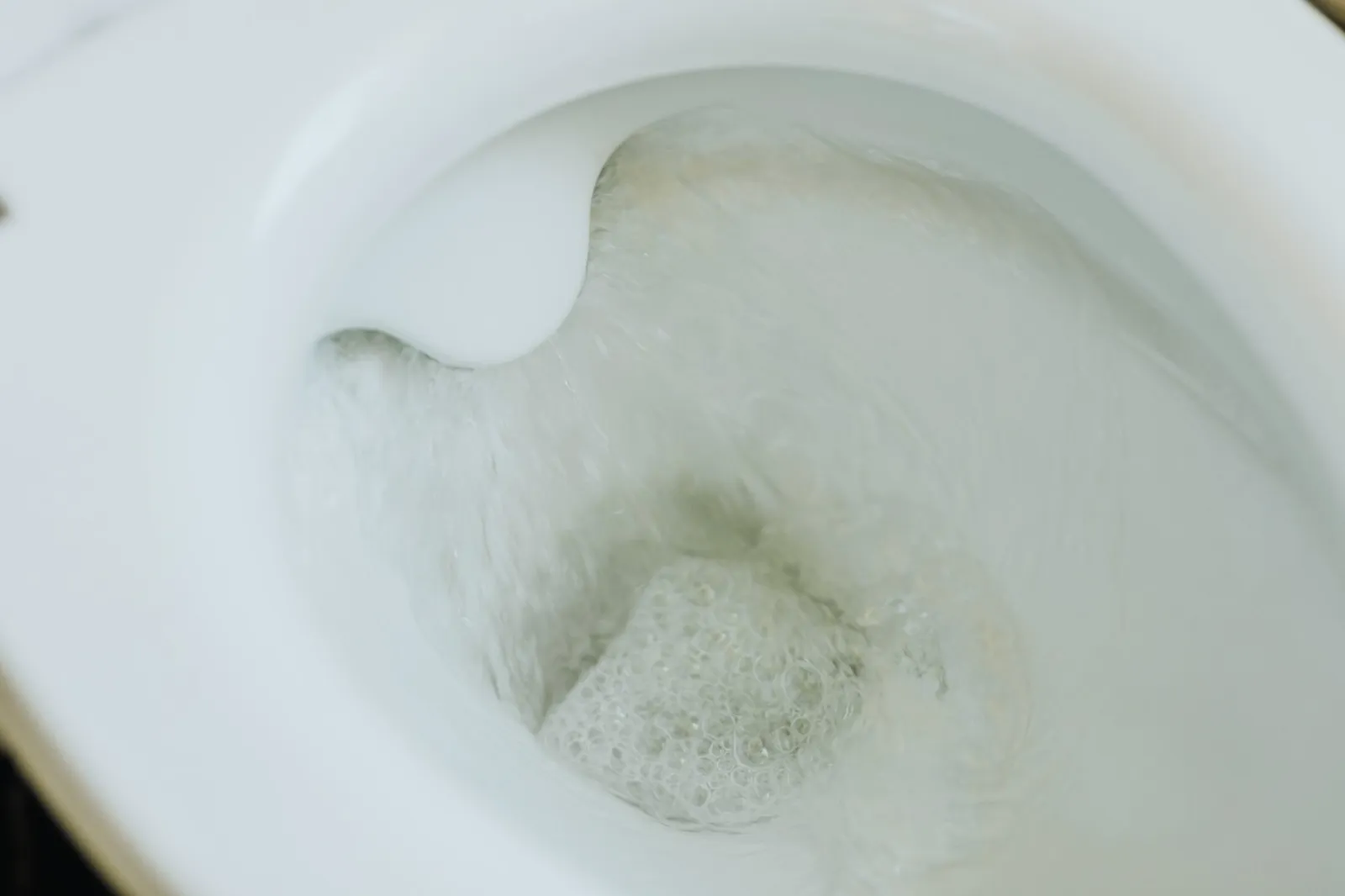
After diagnosing thousands of bubbling toilet issues since 1923, our licensed plumbers know this problem confuses homeowners because it seems illogical: why would running water in the shower cause air bubbles in a completely separate fixture? The answer reveals how your home's plumbing system functions as a connected network and why problems in one part can cause symptoms elsewhere.
Why Fixtures in Different Locations Affect Each Other
Before you start troubleshooting, you need to understand the core plumbing principle behind toilet bubbles when the shower runs:
Your bathroom fixtures share the same drain and vent system.
Your shower drain doesn't have its own dedicated pipe. It ties into a branch line that usually also carries waste from your toilet, sink, and sometimes the tub. All of that eventually feeds into your home's main drain.
Your vent system works the same way; multiple fixtures share the same roof vent. Those vents let sewer gases escape and let air into the system so water can drain without creating a vacuum.
Why this matters for your bubbling toilet:
When the shower drains, it forces air through the shared drain. If the vent is clear and the drain line is unrestricted, that air goes up the roof vent, and you never notice anything.
But if:
-
The vent is blocked
-
The drain line is partially clogged, so the air has nowhere to escape.
So it takes the path of least resistance: up through your toilet.
That's where the bubbling, gurgling, and bowl-level changes come from.
4 Causes of Toilet Bubbling When Shower Runs (Ranked by Frequency)
Based on hundreds of cross-fixture plumbing diagnoses we've completed throughout North Metro Atlanta, here are the four most common causes, ranked from most to least frequent:
1. Blocked Plumbing Vent (60% of Cases)
What's happening: Your plumbing vent, the pipe that runs from your drain system up through your roof, is blocked. When the shower drains, it sends a large volume of water through the shared drain line, which creates negative pressure behind it. If the vent is clear, air enters from the roof and balances the system. If the vent is blocked, the system pulls air from the only place it can: your toilet's trap, causing bubbling or gurgling.
How vents get blocked:
-
Bird or animal nests built inside the vent opening
-
Leaves, pine needles, and general roof debris
-
Winter frost or ice buildup at the vent opening
-
Damaged, missing, or misaligned vent caps
-
Roofing or construction work that accidentally covers or crushes the vent
How to check your vent (if you can safely reach the roof):
-
Find the vent stack, usually a 3-4" vertical pipe.
-
Look directly into the opening for nests, leaves, or other debris.
-
Shine a flashlight down the pipe for shallow obstructions.
-
In cold weather, check for ice buildup.
-
Make sure any vent cap is present and aligned correctly.
Safety note: Don't get on the roof if it's high, steep, wet, or icy, or if you're not comfortable working at height.
Solution: If you see a clear, reachable blockage, you can remove it by hand or run a plumber's snake down the vent from the roof. But many vent issues aren't at the top; they can be deeper in the pipe, inside a wall, or part of a misdesigned vent system. That's where professional tools and camera inspection matter.
A plumber can:
-
Inspect the entire vent line
-
Remove deeper blockages safely
-
Confirm there aren't multiple vent issues
-
Install a vent guard to prevent future debris
Blocked vents are among the most common causes of toilet bubbling and among the quickest to fix once identified.
2. Partial Clog in Shared Drain Line (25% of Cases)
What's happening: The drain line shared by your shower and toilet has a partial clog. It's not completely blocking the flow, but it's restricting the pipe enough to create pressure issues. When the shower drains, water has to squeeze past the obstruction, creating turbulence and forcing air backward through the system. That displaced air vents through the toilet, your system's easiest escape point, causing bubbling or gurgling.
What causes partial drain clogs:
-
Hair buildup from the shower
-
Soap scum mixed with body oils is narrowing pipe walls
-
Small foreign objects that create snag points
-
Hard-water mineral deposits (common in North Georgia)
-
Tree roots intruding into underground lines
-
Sagging, cracked, or deteriorated cast iron or clay pipes
DIY diagnostic test:
-
Fill a bucket with 2-3 gallons of water.
-
Dump it quickly down the shower drain.
-
Watch and listen at the toilet.
-
Significant bubbling = drain restriction, not a vent issue.
-
Solution: If the clog is close to the shower:
-
Remove the drain cover and pull hair/debris with a zip-it tool or small snake.
If the clog is deeper:
-
Use a longer drain auger (10-25 ft) to reach the branch line.
If bubbling still occurs:
-
The clog is likely in the main line, or you're dealing with roots, mineral buildup, or pipe damage.
-
This requires professional equipment: camera inspection, cable machines for soft clogs, or hydro-jetting for heavy buildup.
A plumber can pinpoint the exact blockage and clear it without guesswork.
3. Main Sewer Line Blockage (10% of Cases)
What's happening: Your home's main sewer line, the large pipe that carries wastewater from every fixture, has a partial or full blockage. When the main line can't drain freely, shower water backs up in the system and forces air (and sometimes wastewater) back up through the toilet, which is the lowest and easiest exit point.
This is the most serious cause because it affects every drain in the house, not just the bathroom.
Common causes of main-line blockages:
-
Tree roots entering cracked joints or pipe seams
-
Collapsed or deteriorated pipes (clay, cast iron, Orangeburg)
-
Grease buildup that's hardened over years
-
Foreign objects like wipes, feminine products, or anything that doesn't break down
-
Bellied/sagging sections caused by soil settling, trapping debris and wastewater
Why this is urgent: A main-line blockage can escalate fast. Today it's bubbling and slow drainage. Tomorrow it's raw sewage backing up into tubs, showers, or floor drains, a serious health and property-damage risk.
This is not something to "wait and see" on.
Solution: Main sewer line problems require professional equipment and should not be handled DIY. The blockage may be 20-100 feet away, underground, and inaccessible without the right tools.
A proper repair involves:
-
Video camera inspection to locate the exact blockage and diagnose the cause
-
Cable machines to cut roots or break up debris
-
Hydro-jetting for grease, scale, and heavy buildup
-
Pipe repair or replacement for collapsed or severely damaged sections
A main-line issue is the one scenario where you should stop using water, avoid flushing anything further, and get a pro involved immediately, before it turns into a full sewage backup.
4. Improperly Designed or Installed Venting System (5% of Cases)
What's happening: Your home's vent system may have been poorly designed from the start, or later renovations altered the drainage layout without updating the venting. Modern plumbing codes require specific vent sizes, distances, and configurations to ensure fixtures drain without creating pressure problems. When the vent system isn't designed correctly, the drain lines can't pull in enough air, and your toilet bubbles when other fixtures run.
This is especially common in:
-
Older homes (pre-1970s) with outdated vent layouts
-
Homes where DIY additions were made without adding proper vents
-
Renovations that changed fixture locations but ignored vent requirements
Common venting design problems:
-
Undersized vents: Too small to supply enough airflow
-
Insufficient venting: Too many fixtures sharing one vent, or fixtures too far from the vent
-
Improper slope: Vent pipe sloped backward so water pools and blocks airflow
-
Missing vents: Added bathrooms or remodels without proper vent installation
-
Bad wet-vent configurations: Wet vents that aren't sized or arranged correctly
Solution: Design flaws can't be corrected with snaking or cleaning; they need a proper plumbing assessment. A licensed plumber must map the drainage and venting layout, compare it to code requirements, and design a fix to restore proper airflow.
Depending on the issue, the fix may involve:
-
Adding new vent lines through the walls and the roof
-
Upsizing existing vents
-
Reworking drain branches to reduce the distance to the vent
-
Correcting improper slopes
-
Installing air admittance valves (AAVs) where traditional venting isn't possible
If venting design is the problem, this is the kind of job where professional evaluation is mandatory; you can't "DIY" your way out of an undersized or missing vent. A proper fix permanently eliminates pressure issues and stops the toilet from bubbling.
The Bottom Line on Toilet Bubbling When Shower Runs
If your toilet bubbles or gurgles when the shower runs, you have an air-pressure imbalance in the shared drain/vent system. The noise is your toilet acting as the pressure-relief point.
Most common causes:
-
Blocked roof vent (≈60%)
The shower drains, creates a vacuum, and with no vent air available, the system pulls air through the toilet trap—causing bubbling. -
Partial clog in the shared drain line (≈25%)
Water squeezing past a restriction pushes air backward through the toilet. -
Main sewer line blockage (≈10%)
Much more serious, can escalate to sewage backup. -
Venting design flaws (≈5%)
Undersized, missing, or misconfigured vents that never met code.
What you can do: A visible vent blockage on the roof can sometimes be cleared safely if you're comfortable getting up there. Beyond that, diagnosing whether you're dealing with a vent issue, a drain restriction, a main-line problem, or a design defect requires proper tools and experience.
Why you shouldn't ignore it: Toilet bubbling is always a warning sign. Left alone, it can turn into:
-
Full drain blockage
-
Sewer gas is entering the home
-
Sewage backup into tubs, showers, or floor drains
This is one of those issues that only gets worse with time, so it's worth addressing sooner rather than later.
Toilet bubbling when your shower runs? Our licensed plumbers can quickly diagnose whether you have a blocked vent, drain clog, or main line issue and provide permanent solutions. Contact us for professional toilet and drain diagnosis in Cumming, Alpharetta, Roswell, and North Metro Atlanta.


