
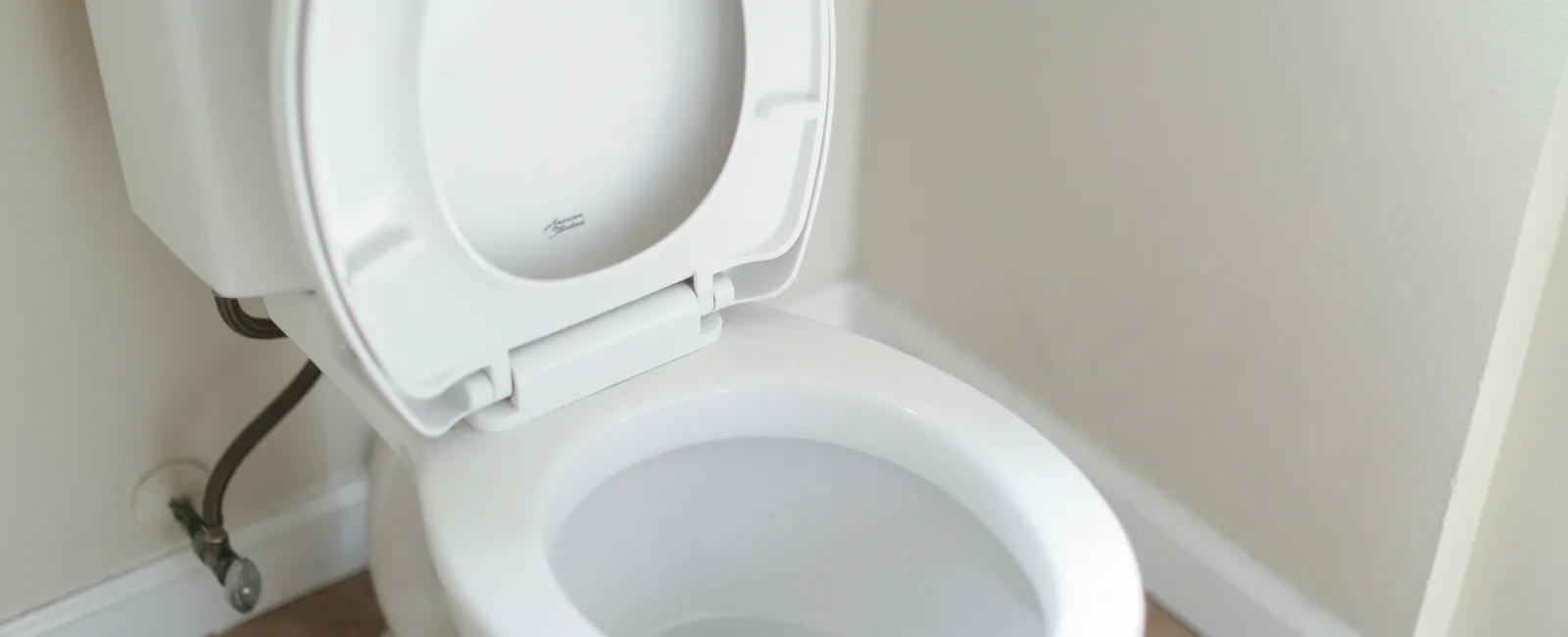
A toilet that clogs with nothing visible in it is maddening. You haven't flushed anything unusual, the bowl looks completely clear, but the water won't go down, and every flush is a gamble.
The problem is hidden, somewhere inside the trap, deep in the drain line, or as far down as your main sewer line, which makes it easy to misdiagnose and easy to make worse with the wrong fix.
Our licensed plumbers have been clearing clogged toilets across North Metro Atlanta since 1923. Here are the five most common hidden causes, what each one looks and feels like, and exactly what to do about it.
What to Do Immediately When Your Toilet Won't Unclog
Before diagnosing the root cause, take these steps to prevent overflow damage and protect your plumbing.
Step 1: Stop flushing. This is the single most important thing you can do. Every additional flush adds water pressure to an already restricted drain, increasing the risk of overflow. If the toilet is slow-draining rather than completely stopped, resist the urge to flush again, hoping it clears on its own.
Step 2: Turn off the water supply to the toilet. The shutoff valve is located on the wall or floor directly behind the toilet base. Turn it clockwise until it stops. This prevents the tank from refilling and eliminates the risk of an accidental overflow if someone else in the house flushes without knowing there's a problem.
Step 3: Try a flange plunger, not a cup plunger. A flat-bottomed cup plunger is designed for flat sink drains. A flange plunger has an extended rubber bell that seals directly into the toilet drain opening and generates real suction pressure. Use firm, controlled plunges 10 to 15 times while maintaining the seal throughout. If the drain does not respond after two full attempts, stop. Repeated plunging against a deep or hardened clog can push it further down the drain line, making professional removal more difficult.
Step 4: Check every other drain in your home. Run water in your bathroom sink, bathtub, and kitchen sink. If any of these drain slowly or back up at the same time your toilet is clogged, the problem is not isolated to the toilet. It is either a shared drain line obstruction, a vent stack failure, or a main sewer line issue, all of which require immediate emergency plumbing service.
Step 5: Contact a licensed plumber if the clog does not clear within two attempts. Our licensed plumbing specialists provide same-day service for clogged toilets throughout Cumming, Alpharetta, Roswell, and North Metro Atlanta. We use professional-grade drain cameras and hydro-jetting equipment to locate and clear blockages without guesswork.
5 Reasons Your Toilet Is Clogged With Nothing in It
1. A Clog Deep Inside the Toilet Trap
The toilet trap is the curved S- or P-shaped channel molded into the porcelain base. It's the narrowest point in your drain path and the most common spot for hidden blockages. Toilet paper that didn't fully dissolve, "flushable" wipes, and compacted waste accumulate gradually until flow is significantly restricted.
What you'll notice: Slow drainage, water rising higher than normal during a flush, and gurgling sounds after each flush cycle. Plunging may offer temporary relief, but the problem returns.
If a toilet auger hasn't resolved it, schedule professional drain cleaning before a partial blockage becomes a complete one.
2. A Partial Blockage in the Drain Line
The drain line behind your wall can narrow over time from toilet paper fibers, organic buildup, and mineral deposits without ever fully blocking. Water passes through, but slowly and with visible strain.
What you'll notice: Consistently sluggish draining after every flush, water swirling weakly, and a bowl that sits slightly higher than normal between flushes.
A plunger won't reach this. Clearing it typically requires professional hydro-jetting or a professional-grade drain snake.
3. A Blocked Plumbing Vent Stack
Your plumbing vents run through interior walls and exit through the roof, supplying air so water flows freely through your pipes. When leaves, debris, bird nests, or ice block the vent, negative pressure builds inside your drain system, making the toilet behave as if it's clogged even though there's no physical obstruction.
What you'll notice: Gurgling or sucking sounds during and after flushing, slow drains appearing simultaneously across multiple fixtures, and faint sewer gas odors.
Vent stack clearing requires roof access and professional equipment. Our licensed team handles this throughout Roswell, Milton, Canton, and the surrounding communities.
4. Mineral Buildup Blocking the Rim Jets
The small holes under your toilet rim direct water into the bowl during each flush. In hard water areas, including much of North Metro Atlanta, calcium, magnesium, and iron deposits gradually narrow these openings and reduce flush power until waste won't clear in a single flush.
What you'll notice: Weak, trickling water around the rim instead of a strong swirl. A mirror held under the rim will reveal dark brownish or reddish deposits partially blocking the jet holes.
Descaling the rim jets often restores performance. If not, the flush valve, fill valve, or flapper may also need attention. All of these are part of our toilet repair service in Alpharetta, Cumming, Sandy Springs, Marietta, and Woodstock.
5. A Main Sewer Line Obstruction or Tree Root Intrusion
Every drain in your home connects to a single main sewer line. When that line is significantly blocked, waste reverses direction and backs up through the lowest drain openings, typically the bathtub first.
Tree root intrusion is one of the most common causes in established neighborhoods. North Metro Atlanta's mature tree canopies make this a recurring issue in Cumming, Buford, Suwanee, Norcross, and Duluth. Roots enter through existing cracks or joints, then grow inside the pipe and catch debris with every flush until the line is fully obstructed.
What you'll notice: Repeated clogs despite cleaning, multiple fixtures backing up simultaneously, water rising in the tub when you flush, and sewage odors near floor drains.
This requires drain camera inspection followed by hydro-jetting, mechanical root cutting, or pipe rehabilitation. A partial main line obstruction will always become complete. Roots don't stop growing.
Related Plumbing Problems Worth Knowing About
A toilet that clogs without a visible cause is often one signal in a broader pattern of plumbing stress. If you've been noticing other unusual behaviors throughout your home, these articles may be directly relevant to what you're experiencing:
- If you hear water sounds inside your walls after flushing or notice soft spots in flooring or drywall near your toilet, read our guide on identifying a pipe burst in your wall before the damage spreads.
- If your bathroom also has a slow shower drain or you've noticed moisture along the shower surround, our breakdown of shower leaking behind the wall covers the warning signs of hidden water damage that often develops alongside chronic drain problems.
- If your hot water smells unusual or your water heater has been inconsistent since the drain problems started, see our article on why a pilot light won't stay lit. Water pressure fluctuations caused by a partial clog in the main line can affect appliance performance throughout your home.
For homeowners dealing with multiple slow drains at once, our drain cleaning and repair service page explains exactly how we diagnose system-wide drainage problems and what the clearing process involves.
The Bottom Line on a Toilet Clogged With Nothing in It
When your toilet is clogged with no visible blockage, the cause is one of five hidden problems: a compacted deep trap clog, a partial drain line blockage, a failed or obstructed plumbing vent stack, mineral-clogged rim jets, or a main sewer line obstruction from buildup or tree root intrusion. The location of the blockage determines the correct fix, and the wrong approach, including repeated forceful plunging against a deep obstruction or ignoring a main line backup, can make the damage significantly worse and the repair significantly more expensive.
Dealing with a toilet that keeps clogging or won't drain despite your best efforts? Contact our licensed plumbing specialists for same-day clogged toilet and drain service throughout Atlanta.


