
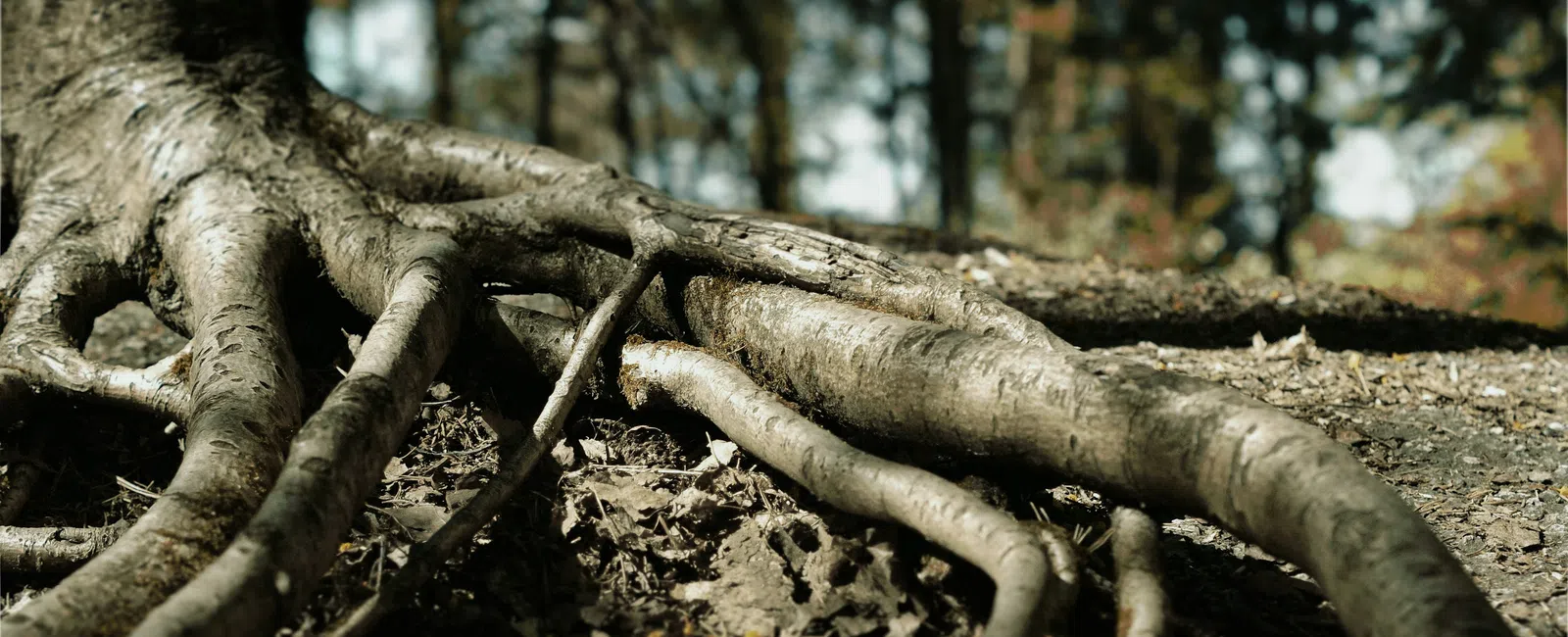
Tree roots find a sewer line by following the water vapor that escapes through tiny gaps at pipe joints and cracks, then grow through those openings into the pipe where a constant supply of water and nutrients waits. Once inside, the roots branch into a mesh that catches toilet paper and waste until the line slows, backs up, or blocks entirely.
Older clay and cast iron sewer laterals are the most vulnerable, because their joints are not watertight the way modern fused pipe is. Across the established neighborhoods of Metro Atlanta, those older lines run directly beneath mature oaks and pines whose roots reach the pipe easily. Root intrusion is one of the most common causes of a main-line backup, and it does not resolve on its own.
How Roots Get Into a Sewer Line
Roots do not puncture solid, intact pipe. They enter where there is already a weakness: a loose joint, a hairline crack, a deteriorated section of old pipe, or a failing seal. Sewer lines carry warm water and nutrients, so the vapor leaking from those small flaws draws roots toward the pipe the way any water source would.
A root tip only needs a gap a fraction of an inch wide to work its way in, and once inside it keeps growing because the environment is ideal. The problem compounds over time, since a small root mass slows flow, traps debris, and holds moisture against the pipe wall, which widens the original opening and invites more root growth.
Warning Signs of Tree Roots in a Sewer Line
The earliest sign is usually a drain that gurgles or runs slow for no clear reason, often a toilet or a lowest level fixture, because the main line is partially restricted. A toilet that bubbles when another fixture drains points to air moving around a blockage downstream.
As the intrusion grows, multiple fixtures back up at once, which separates a main line problem from a single clogged drain. A recurring clog that returns within weeks of being cleared is a strong indicator, since roots regrow into a line that was only cut open rather than fully cleared. These are among the signs you need sewer cleaning. Some homeowners also notice unusually lush or fast growing patches of grass along the path of the sewer line, and a sewage odor in the yard or a soggy strip of lawn over the line points to a break that roots have widened.
| Warning sign | What it usually means |
|---|---|
| Slow or gurgling drain | Early-stage: the main line is partially restricted |
| Toilet bubbles when another fixture drains | Air moving around a blockage downstream |
| Several fixtures back up at once | A main-line issue, not a single clogged drain |
| Clog returns weeks after clearing | Roots regrowing through an unsealed gap |
| Lush grass or soggy strip over the line | Water and nutrients escaping where roots entered |
Why Root Killers and Home Remedies Fall Short
Chemical root treatments sold for home use, including copper sulfate crystals and foaming root killers, can kill the root tips they contact inside the pipe, but they do not remove the root mass or repair the opening the roots came through. The dead roots remain in the line as debris, and new roots grow back through the same unsealed gap within months to a year.
These products also do nothing for the underlying pipe defect, which is the actual problem. Pouring chemicals down the drain treats the symptom on a cycle while the joint or crack keeps letting roots in. For a line that has already backed up, a chemical is not a substitute for mechanically clearing the blockage and addressing the pipe.
How a Plumber Clears and Diagnoses Root Intrusion
Clearing roots from a sewer line starts with cutting them out mechanically. A powered auger with a cutting head shears the roots off inside the pipe and restores flow, and for heavier intrusion, hydro jetting uses high pressure water to scour the root mass and debris from the pipe walls more thoroughly than a cutting head alone.
Clearing the line is only half the job, though, because the roots will return through the same opening. A sewer camera inspection identifies where the roots entered and how damaged the pipe is, by sending a camera through the line to show the joints, cracks, and condition of the pipe directly. That inspection is what separates a temporary clearing from a permanent fix, since it tells the plumber whether the line needs a spot repair, a lining, or a full replacement.
Repairing the Pipe So Roots Stay Out
Once the line is clear and the camera shows where the roots came in, the repair closes that entry point for good. For a localized defect, a spot repair replaces the damaged section. For a line with multiple intrusion points or general deterioration, trenchless methods often apply.
Pipe lining inserts a resin liner that cures into a new seamless pipe inside the old one, sealing every joint and crack without digging up the yard, and pipe bursting pulls a new pipe through the path of the old one while breaking the old pipe outward. Both close the gaps roots used and leave a jointless or sealed interior that roots cannot penetrate. The right method depends on the extent of the damage, which is why the camera inspection comes first.
Why This Matters for North Georgia Homes
The combination that makes root intrusion common here is specific to the region: a large share of Metro Atlanta's older housing stock in Roswell, Alpharetta, and the surrounding areas was built with clay or cast iron sewer laterals, and those same established neighborhoods are shaded by large, mature oaks and pines with aggressive root systems. The roots and the vulnerable pipe sit in the same ground. Total Mechanical Care clears root intrusion with augers and hydro jetting, inspects the line with a camera to find the entry points, and repairs or replaces the pipe so the problem does not keep returning. Catching the early warning signs, a slow drain or a recurring clog, is what keeps a root problem from becoming a full sewage backup inside the house.
Recurring Sewer Clog? Roots May Be the Cause
Total Mechanical Care has served North Georgia homeowners for generations, backed by more than 100 years of combined plumbing experience. A sewer line that gurgles, drains slowly, or clogs on a recurring cycle is worth inspecting before it backs up, and roots caught early are far cheaper to handle than a line that has failed. The team will clear the roots, inspect the line with a camera, and repair the pipe so they stay out, with flat-rate pricing agreed before the work starts and a satisfaction guarantee. Call 404-738-8679 or book online.


